How Long Does a Resin-Bound Driveway Last? A Complete Guide
Resin-bound driveways are a popular choice for homeowners looking for a practical surface with a clean, attractive finish. However, one of the most important questions to consider before choosing this type of surfacing is how long it can be expected to remain in good condition.
The lifespan of a resin-bound driveway depends on several factors, including the quality of the installation, the condition of the underlying surface, drainage, usage and ongoing maintenance. For homeowners in Wisbech, Cambridgeshire, understanding these factors can help when planning a new driveway or considering an existing surface.
What Is a Resin-Bound Driveway?
A resin-bound driveway is created by mixing aggregate with a clear resin before the mixture is trowelled onto a suitably prepared surface. The finished material forms a smooth, stable surface where the individual stones remain firmly bound together.
Unlike loose gravel, a resin-bound surface does not rely on separate stones remaining loose across the driveway. The result is a more uniform finish that can also be designed around the layout and appearance of the property.
How Long Can a Resin-Bound Driveway Last?
A properly installed resin-bound driveway can provide many years of useful service. However, there is no single lifespan that applies to every installation.
The quality of the materials, preparation of the base, installation technique, amount of traffic and maintenance routine all influence how the surface performs over time.
A driveway that has been correctly designed and installed on a suitable base is generally better placed to cope with everyday vehicle use and changing weather conditions.
Why the Base Preparation Matters
One of the most important factors affecting the longevity of a resin-bound driveway is what lies underneath the surface.
Resin-bound material needs a stable, suitable base. If the underlying structure moves, settles or fails to provide adequate support, cracks and other surface problems can develop.
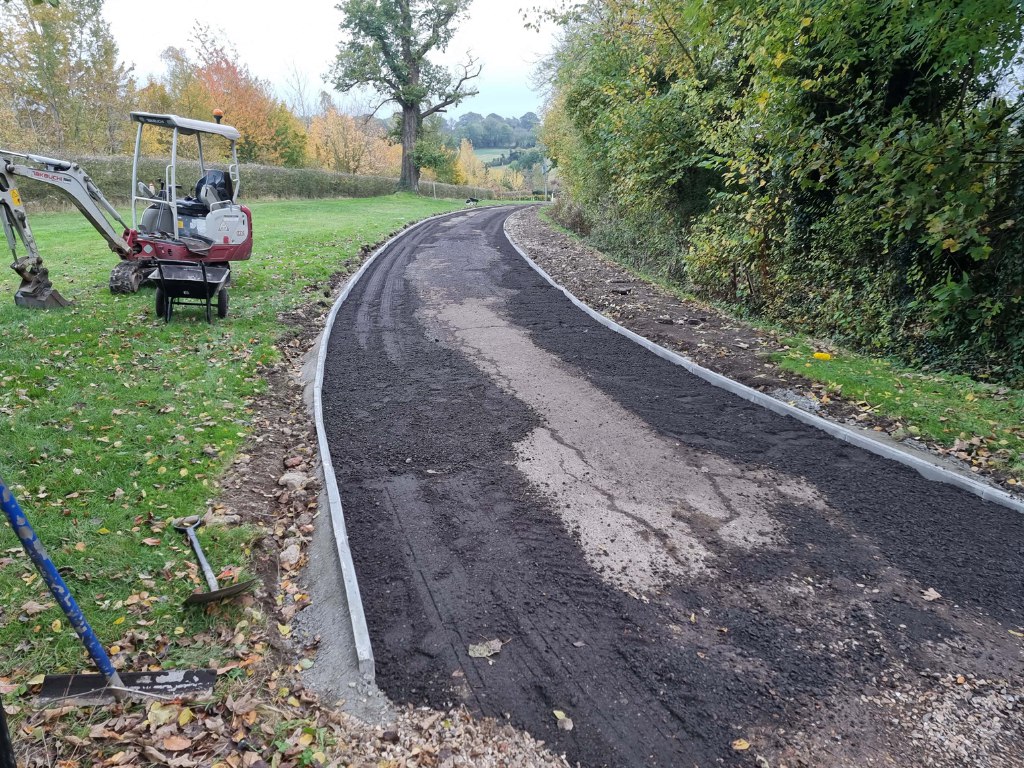
Before installation, the existing area should therefore be assessed carefully. Where necessary, unsuitable materials may need to be removed and the base prepared correctly before the resin-bound surface is installed.
Drainage and Water Management
Effective drainage is another important consideration. Water that remains on or beneath a driveway can contribute to deterioration and other surface problems.
Resin-bound surfacing is often associated with permeable driveway construction, but the complete installation still needs to be properly designed. The underlying ground conditions and drainage arrangements should be considered rather than assuming that the surface alone will solve every water-management issue.
How Everyday Use Affects Longevity
The amount and type of traffic a driveway receives can influence how it performs over the years. A residential driveway used by a small number of vehicles will experience different demands from one that receives frequent or heavier traffic.
Correct construction is therefore particularly important where the driveway will regularly accommodate vehicles. The design and supporting structure should be appropriate for the intended use.
Weather and Seasonal Conditions
Outdoor surfaces are exposed to rain, temperature changes, frost and general seasonal weather. These conditions can gradually affect any driveway surface.
Good installation practices can help the resin-bound surface cope with normal outdoor conditions. However, drainage, the quality of the base and the condition of the surface all remain important in determining how well the driveway performs over time.
Maintenance Can Help Preserve the Surface
Resin-bound driveways are relatively straightforward to maintain, but they should not simply be ignored once installed.
Routine maintenance can include:
- Sweeping away leaves, dirt and debris
- Removing weeds when they appear
- Cleaning stains or spills promptly
- Checking for damaged or deteriorating areas
- Keeping nearby drainage points clear
Regular attention can help maintain both the appearance and functionality of the driveway.
What Can Cause a Resin-Bound Driveway to Deteriorate?
Several problems can affect the performance of resin-bound surfacing. These may include inadequate base preparation, poor drainage, incorrect installation techniques or excessive stress on the surface.
Areas that become loose, cracked or uneven should be assessed rather than ignored. Identifying the cause is important because simply treating the visible surface may not resolve an underlying problem with the construction.
Choosing Professional Resin-Bound Driveway Installation in Wisbech
For homeowners in Wisbech, professional installation can make an important difference to the long-term performance of a resin-bound driveway.
Wisbech Driveways can assess the proposed driveway area, consider the existing surface and ground conditions, and plan the installation around the property’s requirements. Proper preparation and attention to drainage are important parts of creating a resin-bound surface that is suitable for everyday residential use.
Conclusion
The lifespan of a resin-bound driveway depends on much more than the resin and aggregate used to create the surface. Proper ground preparation, suitable drainage, correct installation, appropriate usage and regular maintenance all contribute to long-term performance.
If you are considering a resin-bound driveway in Wisbech, Cambridgeshire, contact Wisbech Driveways to discuss your requirements and arrange a professional assessment of your driveway area.
Call us on: 01954 774 563
Click here to find out more about Wisbech Driveways
Click here to complete our contact form and see how we can help with your driveway needs.