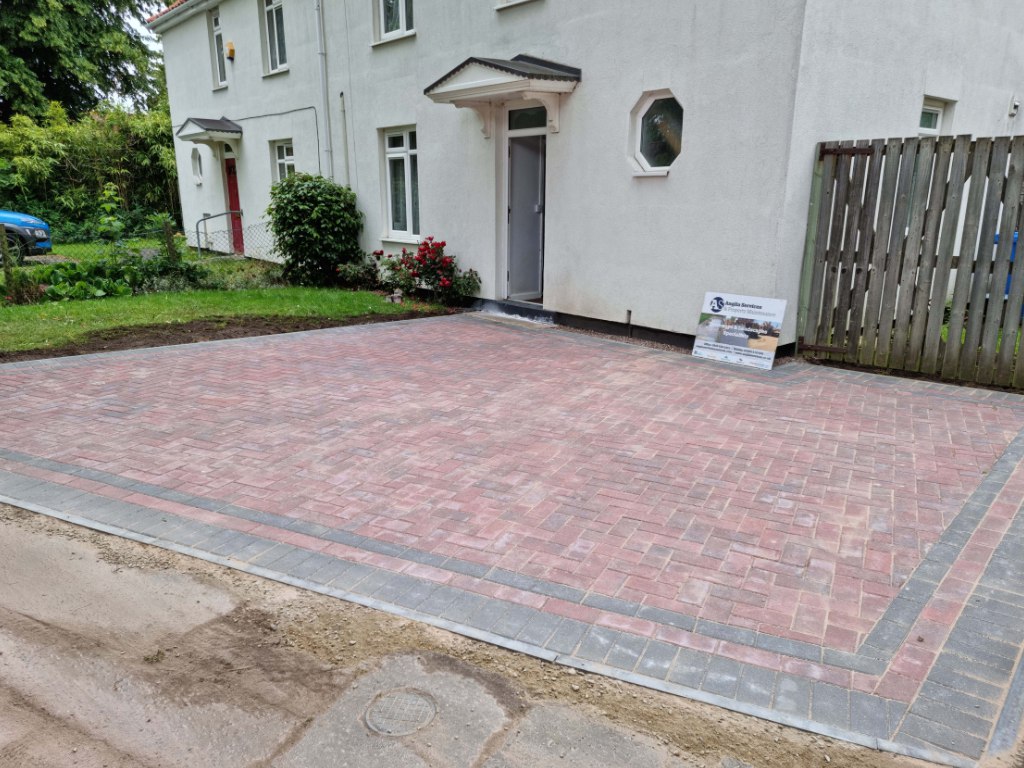
Can a Shingle Pathway Improve Access and Appearance Around Your Garden?
Garden pathways have an important practical role, providing clear routes between different outdoor areas while helping to protect lawns and planting from unnecessary foot traffic. However, a well-designed pathway can also contribute significantly to the appearance of a garden. Shingle is particularly effective in this respect, offering a natural-looking surface that can be shaped around different garden layouts while creating useful, clearly defined access.
For homeowners in Wisbech, Cambridgeshire, a professionally installed shingle pathway can provide an attractive way to improve movement around the garden without making the landscape feel overly formal. At Wisbech Driveways, we carefully consider the intended route, ground preparation, edging and finished appearance to create practical pathways suited to the individual property.
Why Choose Shingle for a Garden Pathway?
Shingle is a loose aggregate surface consisting of small stones that can be laid within defined boundaries to form paths and other landscaped areas. Its appearance makes it particularly suitable for gardens where homeowners want a softer, more natural finish.
A shingle pathway can provide:
- Clearly defined garden access
- An attractive textured finish
- Flexibility around curved areas
- A practical alternative to worn grass
- Visual separation between different garden features
The result can be both functional and decorative when the pathway is planned and installed correctly.
Improving Access Throughout the Garden
Without dedicated paths, frequently used routes across a garden can gradually become worn. Grass may become compacted or muddy, particularly during wetter periods, making access less convenient.
A properly constructed shingle pathway establishes a permanent route between key areas.
It can be used to connect:
- The property and garden
- Patio and lawn areas
- Garden storage
- Seating areas
- Gates and entrances
- Different sections of the landscape
By directing foot traffic along a specific route, the pathway can also help protect surrounding lawns and planted areas.
Creating a More Attractive Garden Layout
Paths influence how a garden looks as well as how it functions. A carefully positioned pathway can introduce structure to an otherwise open space and create a natural visual route through the garden.
Shingle works particularly well because its texture can complement:
- Lawns
- Planting beds
- Timber features
- Paved areas
- Established landscaping
Rather than dominating the garden, the pathway can become part of the overall design.
Shingle Works Well With Curved Pathways
Not every garden suits straight lines. In some outdoor spaces, a gently curved pathway creates a more natural appearance and allows the route to work around existing features.
Shingle is particularly adaptable because it can be contained within edging that follows different shapes.
This makes it suitable for pathways around:
- Planting areas
- Trees
- Lawns
- Garden features
- Irregular boundaries
The flexibility allows the pathway to respond to the existing garden rather than requiring the garden to be redesigned around the path.
Defined Edging Makes an Important Difference
Because shingle is a loose material, suitable edging plays an important role in maintaining the shape of the pathway.
Well-designed edges help:
- Keep the shingle contained
- Clearly define the route
- Separate the path from lawns and planting
- Reduce unnecessary spreading
- Create a neater finished appearance
Edging can also become a subtle design feature, helping the pathway complement other landscaping around the property.
Good Ground Preparation Is Essential
Although a shingle path may appear relatively simple, laying aggregate directly onto untreated ground rarely produces the best long-term result.
Professional preparation helps create a stable foundation and reduces the likelihood of the surface becoming uneven.
The installation process may include:
- Establishing the pathway route
- Excavating the area appropriately
- Preparing and compacting the ground
- Installing a suitable sub-base where required
- Fitting secure edging
- Applying appropriate layers beneath the surface
- Spreading the shingle evenly
The exact construction will depend on the ground conditions and how the pathway is expected to be used.
A Practical Surface During Wet Weather
One of the main reasons homeowners install garden pathways is to improve access when grass and soil become wet.
A correctly constructed shingle path provides a defined surface that helps users avoid walking directly over muddy ground. This can make frequently used parts of the garden more accessible throughout changing seasonal conditions.
Good preparation remains important, however. Drainage and ground conditions should be considered before installation so that the pathway performs effectively rather than simply covering an existing problem.
Shingle Can Help Define Different Garden Areas
Larger gardens can sometimes feel disconnected if there is no obvious route between different features. A pathway can help organise the landscape by creating a clear connection between them.
For example, shingle can provide a transition between a patio and a garden seating area or establish a route from an entrance towards another part of the outdoor space.
This can make the garden easier to navigate while helping individual areas feel like parts of one considered design.
How Much Maintenance Does a Shingle Path Need?
Shingle pathways require some routine attention to keep them looking neat and performing well.
Maintenance may include:
- Removing fallen leaves and debris
- Managing unwanted plant growth
- Raking the surface occasionally
- Returning displaced stones to the pathway
- Replenishing areas when necessary
Good edging and appropriate preparation can make ongoing maintenance considerably easier by helping keep the aggregate where it belongs.
Can a Shingle Path Complement a Patio or Driveway?
A garden path does not need to use exactly the same material as every other hard-landscaped area. In fact, combining surfaces thoughtfully can create attractive contrast.
A shingle pathway can provide a softer transition between more substantial paved areas and the natural garden.
Careful planning of the path’s width, position, shape and edging helps ensure that it complements the wider outdoor space rather than appearing as a separate addition.
Planning the Right Width and Route
The practicality of a pathway depends heavily on its dimensions and position.
A path that is unnecessarily narrow can feel restrictive, while a poorly positioned route may not reflect how people naturally move around the property.
Before installation, it is useful to consider:
- Who will regularly use the path
- Which areas need connecting
- Where people naturally walk already
- Whether the path needs to accommodate garden equipment
- How the route will interact with planting and other features
Designing around actual use helps create a pathway that remains practical over the longer term.
Why Professional Shingle Path Installation Matters
A successful shingle pathway is more than a layer of decorative stone. The foundation, levels, edging and choice of aggregate all contribute to how the finished surface performs.
At Wisbech Driveways, we provide professionally installed outdoor surfaces throughout Wisbech, Cambridgeshire. When planning a shingle pathway, we consider how the area will be used, the existing ground conditions and how the finished route should integrate with the surrounding garden.
This attention to preparation and detail helps create pathways that improve both accessibility and the overall presentation of the property.
Conclusion
A shingle pathway can improve both access and appearance around a garden by providing a clearly defined route that works naturally with the surrounding landscape. Its flexibility makes it particularly useful for straight or curved paths, while the textured appearance can complement lawns, planting and existing hard landscaping.
The quality of the finished path depends on careful preparation. Suitable foundations, secure edging, appropriate levels and thoughtful positioning all contribute to a surface that remains practical and attractive.
For homeowners in Wisbech, Cambridgeshire, Wisbech Driveways can provide professional advice and installation for garden pathways designed around the individual property. If you are considering a shingle pathway to improve access or enhance your outdoor space, contact our team to arrange an assessment and discuss the most suitable approach for your garden.
Call us on: 01954 774 563
Click here to find out more about Wisbech Driveways
Click here to complete our contact form and see how we can help with your driveway needs.